Review: Clap for the Nurse Design
As a designer who has spent countless hours digitizing and stitching out files for clients, I approach every new machine embroidery design with a critical eye. It is not just about whether the image looks cute on a screen; it is about how it translates to thread, how it behaves on fabric, and whether it adds genuine value to a finished product. Recently, I evaluated the Clap for the Nurse They Are Our Heroes design, a piece that sits squarely in the Crafts and Graphics category but demands practical scrutiny before it hits the hoop.
First Impressions and Visual Personality
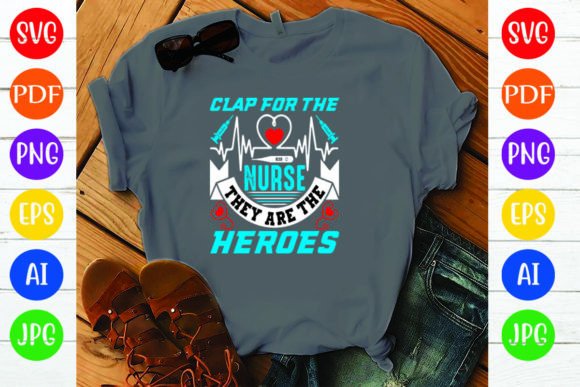
The immediate mood of this design is one of gratitude and resilience. The theme is clear, targeting healthcare workers who have become cultural symbols of dedication. Visually, the layout appears balanced, likely combining bold typography with symbolic imagery such as clapping hands or medical icons. For an embroidery project, this combination needs careful handling. Text-heavy designs can easily become illegible if the stitch density is too high or the font too thin. My initial assessment suggests this design relies on strong, readable lines, which is a positive sign for durability and clarity.
The visual personality is warm yet professional. It does not scream for attention with chaotic details but rather offers a respectful tribute. This makes it versatile. It is not just a novelty item; it is a statement piece. When I look at the provided formats—AI, EPS, PNG transparent, SVG, and PDF—I see a toolkit designed for flexibility. The inclusion of vector formats like AI and EPS means that if you are using this for printable mockups or scaling it for different hoop sizes, you have the raw assets to adjust proportions before digitizing or printing.
Real-World Application: The Tote Bag Test
To truly understand the value of an embroidery file, I imagine it in a real-life scenario. Let us say I am preparing a custom order for a local hospital’s appreciation week. The client wants fifty tote bags for nurses. I choose a sturdy canvas tote because it holds up well to the weight of daily essentials. Here, the Clap for the Nurse They Are Our Heroes design would sit prominently on the front panel.
In this context, the design’s performance is critical. Canvas has a visible weave, so any tiny details in the design might get lost. If the design uses a satin stitch for borders, it will pop against the texture. If it relies heavily on fill stitch areas, I need to ensure the density is not so high that it causes the bag to pucker. A well-digitized version of this design should use underlay stitches effectively to stabilize the fabric before the top stitching begins. The result should be a crisp, professional-looking tribute that withstands the wear and tear of a work bag.
Versatility Across Products
Beyond tote bags, this design has potential across various handmade products. For custom apparel, such as a fleece sweatshirt, the softness of the fabric requires a different approach. A heavy design on fleece can feel stiff and uncomfortable. If I were stitching this on a jacket, I would recommend using a lighter weight stabilizer and possibly reducing the stitch count if the software allows, to maintain the garment's drape. The design could also work beautifully on a structured cap, where the curved surface demands precise placement to avoid distortion.
For smaller items like embroidered patches or aprons, the scalability of the SVG and PDF files is a major advantage. An Etsy seller could use these assets to create digital previews or even print-on-demand items, expanding their revenue streams beyond physical stitching. The ability to change the design color, as noted in the product description, allows for customization. A nurse might prefer soft pastels for a baby-themed gift or bold primary colors for a more vibrant, energetic look on a kitchen towel.
Where Caution Is Needed
While the design is versatile, there are scenarios where it requires careful handling. Small hoop sizes, such as 4x4 inches, might crop essential elements if the original layout is wide. Always check the dimensions before loading the file. Additionally, textured fabrics like terry cloth or thick denim can obscure fine details. If the design includes small lettering or intricate lines, these may merge together on rough surfaces. In such cases, increasing the size of the design or simplifying the stitch path is necessary.
Dark fabrics present another challenge. If the thread colors do not contrast sufficiently with the background, the message gets lost. I always test designs in black and white mockups first to ensure legibility regardless of color choice. For stretchy fabrics like jersey knits, proper stabilization is non-negotiable. Without a cut-away stabilizer, the design may distort after washing, ruining the professional appearance of the finished product.
Impact on Brand and Customer Trust
For craft business owners and Etsy sellers, the quality of the design directly impacts brand consistency. A sloppy stitch-out reflects poorly on the maker, while a clean, crisp execution builds trust. The Clap for the Nurse They Are Our Heroes design, when executed well, enhances the perceived value of the item. It transforms a simple piece of fabric into a meaningful personalized gift. Customers are not just buying an object; they are buying a sentiment. If the embroidery looks professional, they feel confident in the purchase, leading to repeat business and positive reviews.
This design also supports commercial viability. Whether used for holiday embroidery gifts or boutique branding, it fits into the narrative of care and community. For digital product sellers, offering this as part of a bundle with other healthcare-themed assets can increase average order value. The key is presentation. High-quality photos of the stitched design on various fabrics help buyers visualize the end result.
Practical Designer Notes
Before committing to a large production run, follow these steps:
- Test on scrap fabric: Always stitch a sample on the same material you plan to use for the final product. This reveals issues with tension, density, and registration.
- Check thread contrast: Ensure the thread colors stand out against the fabric. Use a color chart to simulate the look before threading the machine.
- Review stitch density: High density can cause puckering, especially on lightweight fabrics. Adjust settings if your machine allows.
- Confirm hoop size: Make sure the design fits within your available hoops without cropping essential elements.
- Inspect small details: Zoom in on the digital file to check for stray nodes or overly complex paths that might cause thread breaks.
- Use proper stabilizer: Match the stabilizer to the fabric type. Cut-away for knits, tear-away for wovens.
- Verify licensing: Although the file includes multiple formats, always confirm the license terms for commercial use before selling finished items.
The Clap for the Nurse They Are Our Heroes design is a solid addition to any designer’s library. It offers emotional resonance and practical versatility, provided it is handled with technical care. By understanding its strengths and limitations, you can create products that honor healthcare workers with the professionalism they deserve.